If you’ve been in digital marketing for a while, you’ve probably heard this advice:
👉 “Use your target keyword as many times as possible to rank higher.”
Sounds logical, right?
But here’s the truth…
Keyword stuffing is actually hurting your website’s ranking. And modern search engines are far smarter than that.
Let’s break down the myth and reveal the real SEO fact.
🚫 The Common SEO Myth: “More Keywords = Higher Rankings”
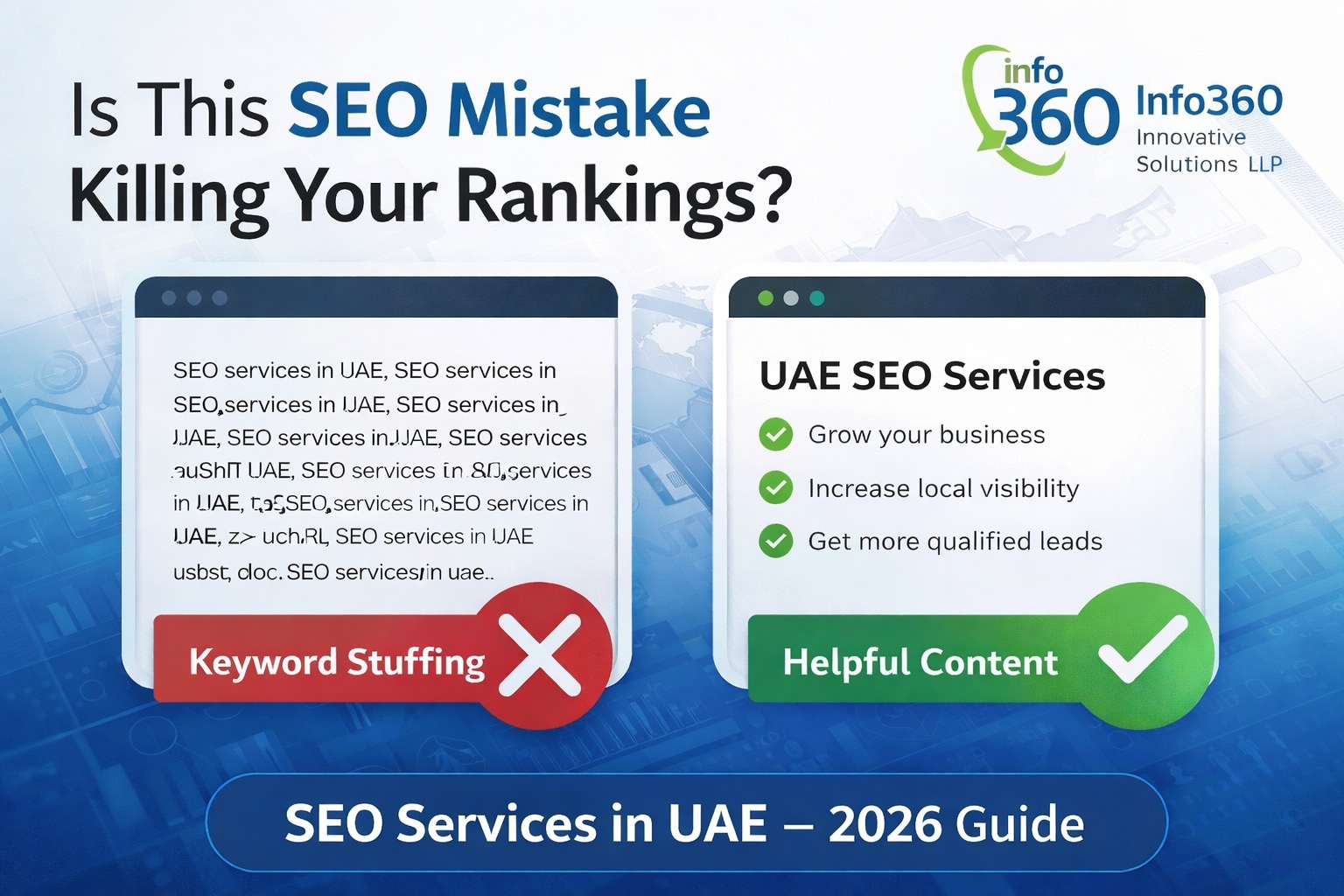
Years ago, search engines relied heavily on keyword frequency to determine relevance. This led to a practice called keyword stuffing — repeating the same keyword unnaturally throughout a page.
Example:
“We are the best SEO company in UAE offering SEO services in UAE for businesses looking for SEO in UAE…”
This used to work.
But not anymore.
✅ The Truth: Google Ranks Relevance, Quality & Intent — Not Keyword Density
Google now uses advanced algorithms powered by AI, Natural Language Processing (NLP), and user behaviour signals.
Instead of counting keywords, Google evaluates:
✔ Search intent
✔ Content depth and usefulness
✔ User experience (UX)
✔ Page speed
✔ Mobile responsiveness
✔ Backlink quality
✔ Engagement metrics (CTR, bounce rate, dwell time)
Modern updates like:
• Google Panda
• Google Hummingbird
• Google RankBrain
• Google Helpful Content Update
…focus on content quality and user satisfaction — not keyword repetition.
🔎 Why Keyword Stuffing Damages Your Rankings
1. Poor User Experience
Awkward, repetitive content drives visitors away.
2. Higher Bounce Rate
Users leave quickly, signalling low quality.
3. Google Penalties
Over-optimization can trigger ranking drops.
4. Loss of Trust
Spammy content reduces brand credibility.
💡 What Actually Works in 2026 SEO?
| Strategy | What To Focus On |
|---|---|
| 1️⃣ Search Intent Optimization | 2️⃣ Semantic SEO |
|
|
| 3️⃣ High-Quality Content Structure | 4️⃣ User Experience Signals |
|
|
📊 Real Example
Instead of writing:
“Best SEO expert in UAE providing SEO services in UAE for UAE businesses…”
Write:
“Looking to grow your business visibility in UAE? Our data-driven SEO strategies help local brands rank higher, attract qualified leads, and increase conversions.”
Notice the difference?
✔ Natural
✔ Clear
✔ Value-driven
✔ Intent-focused
🎯 Final Verdict
Myth: More keywords improve rankings.
Fact: Helpful, relevant, user-focused content improves rankings.
If you’re still optimizing for keyword density instead of user intent, your website could be silently losing visibility.
🚀 Pro Tip for Business Owners
Ask yourself before publishing any page:
“Would this genuinely help my target audience — even if Google didn’t exist?”
If the answer is YES, you’re doing SEO right.